Showing posts with label diagnosis. Show all posts

Friday, November 2, 2012

Sea Spine Florida Orthopedic Institute Welcomes Dr. Phillip A. Pullen


Sea Spine Orthopedic Institute, the leading Florida orthopedic spine treatment center is excited to welcome Dr. Phillip A. Pullen, board certified Osteopathic Physician, to its team.
Dr. Pullen joins Sea Spine Orthopedic Institute and will be responsible in providing full-time orthopedic services and sports injury treatment. As an expert in the latest orthopedic procedures and techniques, Dr. Phillip A. Pullen focuses in providing patient treatment for problems caused by stress or injury. Specializing in arthroscopic procedures, ligament reconstruction, and hip & knee replacement.


Click Here to read the full article.


For more information or to make an appointment with Dr. Pullen, please contact Sea Spine Orthopedic Institute at 866-816-7846 or visit http://www.seaspineortho.com like us on Sea Spine Facebook and follow us on Sea Spine Twitter

Friday, July 27, 2012

Preventing Carpal Tunnel Syndrome


Carpal Tunnel Syndrome is something that has become more and more frequent in the age of technology and is the leading cause in the U.S. for lost workdays.  Carpal Tunnel Syndrome or CTS is caused by pressure on the median nerve that is located in your wrist.  Anyone who works with a computer on a daily basis has heard of this and maybe has experienced a form of this in some way or another.  The symptoms include any pain, tingling, or numbness found from the fingertips to the forearm.  

Women are also more likely to suffer from CTS and that it may be as high as 70% of cases.  The percentages of occurrences go up even higher when a woman is pregnant or going through menopause.  People that suffer from CTS spend an average of 30 days off work.  The reason for this is that most people that have some form of CTS always opt for surgery to help correct the issue.

The first and foremost way to prevent CTS is to live an active lifestyle.  Being overweight can place a higher strain on all your joints and muscles and in turn lead to a greater risk of developing CTS.  Exercising regularly and maintaining a healthy diet can help with the prevention of CTS.  Smoking can also increase the risk of CTS so here is just another reason not to smoke.


Another way to decrease the risk of getting CTS is through regular breaks if you have a routine of repetitiveness.  For example, if you are working at a computer for more than an hour at a time it would be recommended that you take a five minute break every hour or so.   Try stretching before and after your break and especially before and after you begin work.   You will find that it will help improve the longevity of any activity you preform that can lead to CTS.

The most important prevention tip in general for any office related aliment is proper office ergonomics.  This can help prevent a wide ray of work related injuries including CTS.    If you have an office job, are you comfortable sitting at your desk for long periods of time?  Are your wrists and forearms properly supported when you use a computer?  These are important things to take into consideration when trying to prevent CTS.  Try adjusting your chair height or the way you sit and you will immediately feel the difference.  Most office chairs have a few ways to adjust the overall posture.


Hopefully, with these simple tips you can help to prevent Carpal Tunnel Syndrome and continue to be productive in your career for many years to come.  If you or anyone you know is experiencing any CTS symptoms please contact one of our many offices to set up an appointment.  Our highly qualified staff of nurses and surgeons would be more than happy to help you get back to the active work lifestyle you once experienced.

If you're looking for professional and experienced high-rated orthopedic surgeon in Florida, contact Sea Spine Orthopedic Institute today at 866-816-ORTHO.


Like us on
Facebook
Follow us on
Twitter

Monday, June 25, 2012

Getting a Second Opinion

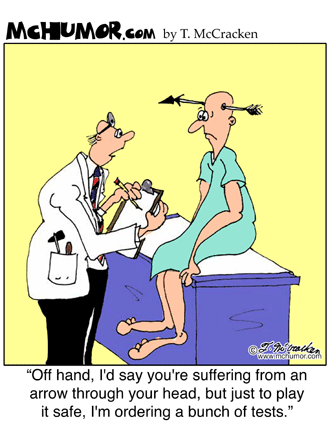
Going to see a doctor can be a very traumatic experience for many people, especially if it is followed by a negative diagnosis that requires some kind of surgery or treatment.  If you are anything like me you have always trusted your doctors and their opinions.  However, as I have learned not every doctor has all the answers and even though it does not always happen doctors can give the wrong diagnosis.  After all they are only human, just like the rest of us they can make mistakes.  In 1999 the Institute of Medicine conducted a survey that came up with results that between 44,000 and 98,000 Americans die each year in hospitals from errors that could have been prevented.  The scary part is that does not include medical errors that kill patients once they leave the hospital. 
Not all diagnosis, however, require a second opinion.  Some diagnoses are conclusive. For example, a fasting plasma glucose (FPG) test measures blood glucose in a person who has not eaten anything for at least 8 hours. This is the test they use detect diabetes and pre-diabetes in a person and does not require a second opinion because those tests are always conclusive. 
Where these conclusive diagnoses are few and far between what you really have to be mindful of are conclusions that are followed by an invasive surgery or some kind of aggressive treatment like chemotherapy.  Not only could these surgeries and treatments be dangerous themselves but they can cause complications on their own if not done properly.  
I find that peace of mind is reason enough for some people to get second opinions.  The surety of what you are diagnosed can always be in question, but sometimes getting that second opinion may help you accept your condition and move forward. 
The flip side of this debate is the fact that second opinions can be very costly.  Especially to those who do not have health insurance.  “The Commonwealth Fund Health Insurance Tracking Survey of U.S. Adults finds that one-quarter of adults ages 19 to 64 experienced a gap in their health insurance in 2011, with a majority remaining uninsured for one year or more.”  That is a lot of people without health insurance, and unfortunately a lot of people that do not have the luxury of getting second opinions.
Another reason not to get a second opinion might be that your doctor or specialist might be the best in their field, or what they tell you might make a lot of sense to you.  If you assumed you had specific allergies and you doctor confirms that, more than likely you would not seek a second opinion.  Maybe the treatment itself is minor and does not require a surgery.  If there would not be any side effects to the treatment would you consider the treatment more? Of course you would, but if it came down to cancer I bet you would most assuredly want a second opinion before you proceeded forward with any surgeries or chemo.
It is important to understand when you are in need of a second opinion.  Whether it be a minor or major diagnosis a second opinion could save your life, or be a total waste of time and money.  A second opinion will always be a personal preference.  As we get older and are faced with the eventual decline of health it is detrimental to understand these differences when making the choice of getting a second opinion.  After all when it comes to your own health what could be more important.


For more information on Sea Spine Orthopedics Institute please click on the link to visit our website.


Like us on Facebook
Follow us on Twitter